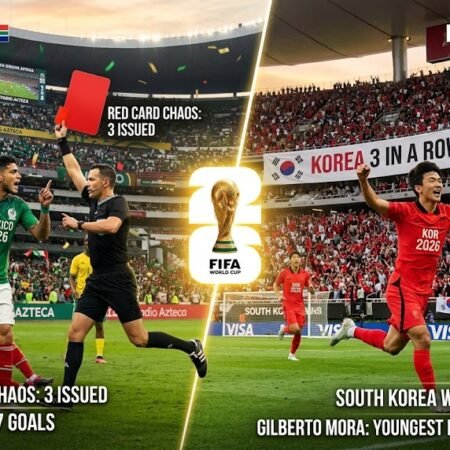




So, you’re wondering what’s changing for the 2026 FIFA World Cup? You’re not alone! The next tournament is going to look quite different, and that’s a good thing for a lot of fans and players around the globe. The biggest news is the expansion of the participating teams, which means more nations get to experience the thrill of playing on the world’s biggest soccer stage. Beyond that, expect a new tournament format, a clear selection process for host countries, and a significant role for technology like VAR. Plus, there’s a growing emphasis on making the event more sustainable and truly engaging for everyone involved.
More Teams, More Dreams: The Expanded Tournament
The 2026 FIFA World Cup is a landmark event for a very straightforward reason: it’s going to be bigger than ever before. For decades, the tournament has showcased 32 national teams, a number that became familiar to fans. However, that’s all changing, and the shift opens up the competition to a much wider array of talent.
A Jump to 48 Teams
The most prominent change is the expansion from 32 to a staggering 48 teams. This decision wasn’t made lightly, and it reflects a desire to be more inclusive and give more confederations a chance to compete. Think about all the nations that are passionate about soccer but have historically found it incredibly difficult to navigate the qualification process with only a limited number of spots available. This expansion directly addresses that.
How the Slots Are Distributed
While the exact breakdown is still being fine-tuned, the intention is to distribute these additional slots equitably across FIFA’s confederations. This means continents like Africa, Asia, and North, Central America, and the Caribbean (which will see significant increases) will have more representation. South America and Europe will also see their quotas rise, though perhaps not to the same extent proportionally. This aims to reflect the growing global footprint of soccer and acknowledge the development happening in these regions.
Implications for Competition
Of course, opening the doors to more teams raises questions about the quality of competition. However, the reality is that soccer is developing rapidly worldwide. Many national teams that might have struggled to qualify in the past have invested heavily in their infrastructure, coaching, and player development. This expansion is a vote of confidence in that global growth and provides a new incentive for nations to raise their game. It also means we might see some exciting new matchups and potentially some surprising performances from teams we haven’t seen often on the World Cup stage before.
A New Way to Play: The 2026 Tournament Format
With nearly 50% more teams involved, the structure of the tournament itself had to be rethought. The old group stage, followed by knockouts, worked well for 32 teams, but it wouldn’t translate smoothly to 48. FIFA has opted for a format that aims to maintain excitement while accommodating the increased number of participants.
The Group Stage Shuffle
The initial phase will see the 48 teams divided into 12 groups of four teams each. This structure allows for a familiar start to the tournament, with teams battling it out in round-robin play within their groups. It’s a tried-and-tested method that generates plenty of drama and allows teams to find their rhythm.
Advancing Through the Ranks
The key change here is how teams progress. The top two teams in each of the 12 groups will automatically advance to the knockout rounds. On top of that, the eight best third-placed teams across all groups will also earn a spot in the next stage. This “best of the rest” element is crucial; it ensures that strong teams that might have had one bad game or been drawn into a particularly tough group aren’t unfairly eliminated. It adds another layer of complexity and opportunity within the group stage.
The Knockout Rounds Expand
Following the group stage, the tournament will enter a knockout phase, but with a significantly larger field. With the top two from each group and the best third-placed teams, you’re looking at 32 teams reaching this stage. This means a round of 32, followed by a round of 16, quarter-finals, semi-finals, and then the grand finale. This structure maintains the single-elimination tension that makes the knockout rounds so captivating. It also means more games, which, for many fans, is a welcome prospect.
The Road to Hosting: A Clearer Selection Process
Choosing the host for a tournament as massive as the FIFA World Cup is a monumental task, involving immense infrastructure, security, and logistical considerations. For 2026, FIFA has outlined a more transparent and structured approach to selecting the host nations, aiming to ensure the best possible outcome for the tournament and for soccer’s development. Click here to view the regulations for the 2026 World Cup.
A Joint Bidding Era
The 2026 World Cup will be uniquely historic as it’s the first time three nations will jointly host: Canada, Mexico, and the United States.
This collaborative approach is a significant shift from past tournaments, which were typically hosted by a single country. The idea behind joint bids is to share the financial and logistical burden, leverage existing infrastructure, and spread the positive impact of the World Cup across a wider region. It also allows for more flexibility in stadium selection and fan accommodation.
FIFA’s Evaluation Criteria
When considering bids, FIFA employs a rigorous evaluation process.
This isn’t just about who can promise the best party. Key factors include:
- Infrastructure: This encompasses stadium capacity and quality, training facilities, accommodation, and transportation networks. The host nations need to be able to comfortably house tens of thousands of players, staff, media, and millions of fans.
- Financial Viability: The ability of the host nation(s) to secure the necessary funding and guarantees is paramount.
This includes government support, sponsorship, and projected revenues.
- Security and Safety: Ensuring the safety of all participants and spectators is a non-negotiable priority. This involves detailed security plans and close cooperation with local authorities.
- Human Rights and Labor Standards: Increasingly, FIFA is scrutinizing host nations’ adherence to international human rights and labor laws. This is a critical aspect of responsible tournament hosting.
- Sustainability: The environmental impact of hosting such a large event is a growing concern, and bidders are expected to demonstrate a commitment to sustainable practices.
Stakeholder Consultation
Beyond the technical evaluations, FIFA also engages in extensive consultations with various stakeholders, including national football federations, confederations, and potentially even fan groups.
This ensures that the chosen host(s) are not only capable but also widely supported within the global soccer community. The goal is to pick a host that can deliver a memorable and successful tournament while also contributing to the long-term development of the sport.
Technology Takes Center Stage: VAR and Beyond
Technology has become an indispensable part of modern soccer, and the 2026 World Cup will see even more integration, particularly with the continued use and refinement of Video Assistant Referee (VAR) technology. While not strictly a “new” rule, its role and application are evolving, aiming to improve the accuracy of decisions on the field.
The Evolution of VAR
VAR has been a talking point since its widespread introduction. For 2026, expect continued efforts to streamline its use and minimize communication delays. The focus will be on ensuring VAR intervenes only for clear and obvious errors, maintaining the flow of the game. Training for VAR officials and referees continues to be a priority, aiming for greater consistency and understanding of its application.
Potential for Other Tech
While VAR is the most prominent, FIFA is always exploring other technological advancements that could enhance the game. This could include anything from improved goal-line technology to sensors that provide more detailed performance data for players and teams. The aim is always to use technology to support the integrity and enjoyment of the sport, not to disrupt it.
Data and Analytics
The incorporation of advanced data analytics will likely play a significant role, both for teams in their preparation and for broadcast coverage designed to enhance the fan experience. Expect more in-depth statistical breakdowns and insights available to viewers.
Sustainability and Environmental Consciousness

The world is more aware than ever of the environmental challenges we face, and major global events like the World Cup are under scrutiny to minimize their footprint. For 2026, there’s a clear commitment to making the tournament more sustainable and environmentally friendly.
Reducing Carbon Emissions
This involves a multi-pronged approach. For the 2026 World Cup, especially with three host nations spread across a large geographical area, transportation will be a key focus. Efforts will be made to encourage public transportation, optimize travel routes for teams and fans, and potentially invest in greener aviation options where feasible.
Waste Management and Resource Efficiency
Expect comprehensive waste management programs at stadiums and fan zones, aiming for high recycling rates and the reduction of single-use plastics. Water conservation efforts and the use of renewable energy sources for tournament operations will also be prioritized.
Promoting Eco-Friendly Practices
Beyond operational aspects, the tournament will likely aim to use its platform to raise awareness about environmental issues. This could involve partnerships with environmental organizations, educational campaigns for fans, and the promotion of sustainable tourism in the host cities. The goal is not just to host an event but to leave a positive environmental legacy.
Enhanced Fan Engagement and Experience
The World Cup is as much about the fans as it is about the players, and the 2026 edition is set to offer a more immersive and engaging experience for everyone attending or following the games.
Digital Innovations
The digital landscape is constantly evolving, and the 2026 World Cup will leverage the latest technologies to connect with fans. This could include augmented reality (AR) experiences for those at the stadium, interactive fan zones with VR simulations, and enhanced mobile applications that provide real-time updates, personalized content, and even ticketing and in-stadium ordering.
Immersive Stadium Experiences
Beyond the digital realm, efforts will be made to enhance the in-person experience. This might involve more fan-friendly stadium designs that improve sightlines and amenities, diverse entertainment options before and after matches, and initiatives to foster a sense of community among supporters from different nations.
Accessibility for All
An important aspect of fan engagement is ensuring the tournament is accessible to everyone, regardless of age, ability, or background. This means considering the needs of individuals with disabilities in stadium design and event planning, as well as making ticket prices and travel options as affordable as possible to encourage broad participation.
New Qualification Criteria and Pathway
With the expanded format comes a revised qualification process. The aim is to give more nations a genuine opportunity to reach the finals while maintaining the competitive integrity of the process.
Confederation Adjustments
Each of FIFA’s six confederations will see adjustments to their qualification routes. While the precise details will be ironed out by each confederation, the overarching principle is to allocate the increased number of berths fairly. For example, the Confederation of African Football (CAF) and the Asian Football Confederation (AFC) are expected to receive significantly more direct qualification spots.
Meaningful Competition Throughout
The revised criteria are designed to ensure that qualification is a meaningful and competitive journey for as many teams as possible. This means that fewer teams will be eliminated in the very early stages, and more nations will have the opportunity to experience competitive international matches leading up to the finals. The goal is to raise the overall standard of play globally.
Host Nation Automatic Qualification
As is standard practice, the host nations – Canada, Mexico, and the United States – will automatically qualify for the tournament finals. This decision is made well in advance to allow them adequate time for preparation.



Legacy and Global Soccer Development
The FIFA World Cup is more than just a month-long tournament; it’s an event that leaves a lasting impact on the sport and the regions it touches. The 2026 edition is being planned with a strong focus on its legacy and its contribution to the global development of soccer.
Infrastructure Investment
Hostinging a World Cup, especially a multi-nation one, often leads to significant investment in infrastructure. This can include the development or upgrading of stadiums, training facilities, transportation networks, and hospitality services. The aim is that these improvements will benefit local communities and soccer leagues long after the tournament concludes.
Grassroots Development Programs
A key component of the World Cup legacy is its impact on grassroots soccer. FIFA, in conjunction with host nations and confederations, is expected to implement programs aimed at nurturing young talent, improving coaching standards, and increasing access to the sport for children and communities that may have previously been underserved.
Empowering Women’s Soccer
With the growing prominence of women’s soccer, there’s an increasing expectation for World Cups to contribute to its development. This could involve initiatives focused on supporting women’s leagues, providing resources for female athletes and coaches, and using the men’s tournament platform to shine a spotlight on the women’s game.
Economic and Social Impact
Beyond the sporting aspects, the World Cup is designed to have a positive economic and social impact. This includes job creation, tourism revenue, and the promotion of cultural exchange. By fostering a sense of unity and shared experience, the tournament aims to leave a legacy of goodwill and understanding across the participating nations and beyond. The expanded nature of the 2026 World Cup, with its three host nations, amplifies these potential benefits across a larger geographical area, promising a truly global impact.
FAQs
1. What are the new rules for the FIFA World Cup 2026?
The FIFA World Cup 2026 will feature expanded teams and format, a new host country selection process, the inclusion of Video Assistant Referee (VAR) technology, sustainability and environmental initiatives, enhanced fan engagement and experience, new qualification criteria, and a focus on legacy and impact on global soccer development.
2. How many teams will participate in the FIFA World Cup 2026?
The FIFA World Cup 2026 will feature an expanded format with 48 teams participating, up from the current 32 teams.
3. What is the host country selection process for the FIFA World Cup 2026?
The host country selection process for the FIFA World Cup 2026 will be based on a new system that aims to make the process more transparent and inclusive, with a focus on sustainability and legacy.
4. How will Video Assistant Referee (VAR) technology be incorporated into the FIFA World Cup 2026?
The FIFA World Cup 2026 will see the inclusion of Video Assistant Referee (VAR) technology, which aims to assist referees in making correct decisions during matches.
5. What are the sustainability and environmental initiatives for the FIFA World Cup 2026?
The FIFA World Cup 2026 will prioritize sustainability and environmental initiatives, with a focus on reducing the tournament’s carbon footprint and promoting eco-friendly practices.