


Geopolitical Fallout: The Iran Visa Crisis and Travel Bans Explodes Ahead of 2026 World Cup
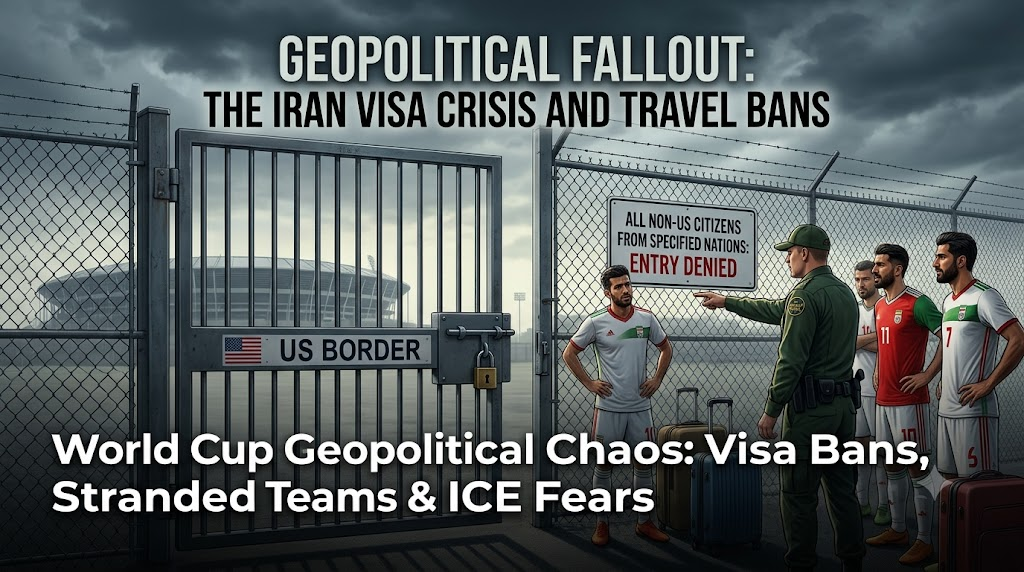
While FIFA envisioned the 2026 World Cup as a harmonious, tri-nation celebration of global football, the harsh realities of international diplomacy have aggressively intervened. The buildup to the tournament has devolved into a geopolitical minefield, characterized by teams training in exile, sweeping travel blacklists, and a historic diplomatic standoff involving the host nation.
At the epicenter of this chaos is a unprecedented security and immigration crisis involving the Iranian National Team, strict US immigration enforcement, and systemic panic among immigrant fan bases.
1. The Iran Visa Crisis: A Team Stranded in Exile
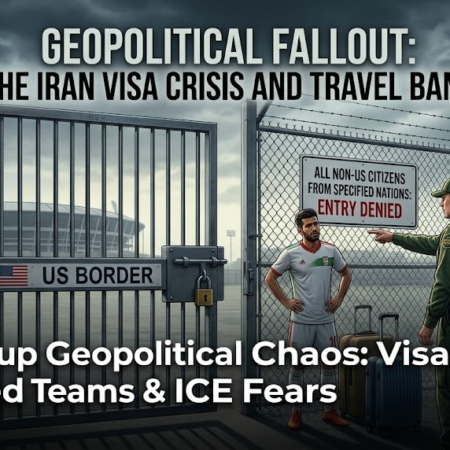
Naturally, hosting a sports tournament where the primary host country is actively locked in severe military and political conflict with another participant was bound to trigger logistical nightmares. Following intense hostilities breaking out between the United States, Israel, and Iran, Team Melli (the Iranian National Team) has found itself treated more like a diplomatic liability than a qualifying athletic squad.
Stranded in Antalya and Tijuana
The friction began early when Iran’s president was denied a US entry visa for the World Cup draw ceremony, sparking boycott threats. However, the operational crisis peaked when the team attempted to establish its pre-tournament training camps.
- The Overnight Ban: The US government flatly refused to allow the Iranian delegation to stay overnight anywhere within US borders.
- The Tijuana Relocation: Forced out of their planned facilities in Arizona, the team attempted to negotiate a relocation to Tijuana, Mexico—just south of the San Diego border. Mexican President Claudia Sheinbaum confirmed that the logistical shuffle was entirely due to the US refusal of entry.
- The Visa Deadlock: As of late May, the crisis escalated further. The Iranian delegation remained completely stranded at a temporary base in Antalya, Turkey. Neither the United States nor Mexico had issued the required entry visas for the team.
The Revolutionary Guard Precedent
A primary legal hurdle holding up the visas involves the background of the players themselves. Several key members of the Iranian squad, including captain Mehdi Taremi, previously completed their mandatory national military service within the nation’s Islamic Revolutionary Guard Corps (IRGC). Because the IRGC is officially designated as a terrorist organization by both the United States and Canada, immigration officials face an unprecedented legal paradox in granting them entry.
A Veiled Threat? While FIFA has remained silent on the visa deadlock, US President Donald Trump posted a highly controversial statement on social media, claiming that while the team was technically welcome, it would not be “appropriate that they be there, for their own life and safety”—a statement widely interpreted by international soccer federations as a veiled threat.
2. The US Travel Bans: Blacklisted Teams and Fans
The geopolitical fallout extends far beyond the pitch of Team Melli. The current US administration’s aggressive immigration policies have effectively barred thousands of international passport holders from attending the matches they spent years saving for.
The Blacklist Breakdown
A series of strict travel bans and intense vetting protocols have fractured the global fan base:
- Total Bans: Fans and citizens originating from Iran and Haiti are facing absolute blocks on US entry.
- The African Contingent: Supporters from Senegal and the Ivory Coast have been heavily impacted by the administration’s latest sweeping travel restrictions.
- The $15,000 Visa Deposit: In a highly criticized financial barrier, travelers from Algeria, Cape Verde, and Tunisia were briefly informed they would need to post a temporary $15,000 cash security deposit to secure a visitor visa. While the mandate was temporarily walked back after intense international blowback, the bureaucratic damage was already done, stifling ticket sales across North Africa.
3. ICE Enforcement and the Climate of Fear for Migrant Fans
For many historic debutant nations, the joy of qualifying has been entirely overshadowed by domestic fear within the United States. Human rights organizations, including Amnesty International and Human Rights Watch, have issued urgent warnings regarding aggressive immigration enforcement operations scheduled around host cities.
The Haitian Diaspora Dilemma
The Haitian National Team qualified for the World Cup for the first time since 1974, a historic feat that should have united the estimated 850,000 Haitians living in the United States. Instead, the community is gripped by panic.
With the US administration actively moving to strip Temporary Protected Status (TPS) from Haitian migrants, many fans are choosing survival over sport.
The Club World Cup Precedent
These fears are not unfounded. A damning report from Human Rights Watch revealed that during the 2025 Club World Cup—which acted as FIFA’s logistical test event in the US—an asylum-seeker who attended the final in New Jersey with his children was targeted, arrested by Immigration and Customs Enforcement (ICE) agents, and swiftly deported. This high-profile arrest has sent shockwaves through immigrant communities, ensuring that thousands of local fans will boycott the stadiums out of fear for their safety.
4. The Seattle Pride Match Standoff
As if geopolitical warfare and immigration raids weren’t enough, a massive cultural oversight by local organizers has created an independent diplomatic incident in the Pacific Northwest.
The host city of Seattle enthusiastically designated one of its local group-stage fixtures as an official “Pride Match” to coincide with the city’s annual Pride festival. However, this designation was made before the final tournament draw was blind-selected.
The draw ultimately placed Iran and Egypt into that exact Seattle fixture.
Because homosexuality remains strictly illegal in both Egypt and Iran—and carries the death penalty in the latter—government officials from both visiting nations have lodged furious, formal objections with FIFA. The match now stands as a tense diplomatic standoff, balancing Western corporate inclusivity against the hardline laws of the participating Middle Eastern and North African states.
Frequently Asked Questions (FAQs)
Why is the Iranian soccer team training in Mexico for the World Cup?
The Iranian National Team was forced to move its training base to Tijuana, Mexico because the United States government refused to allow the delegation to stay overnight within US borders due to ongoing geopolitical conflicts.
Why are Iranian players being denied US visas?
Many Iranian players, including team captain Mehdi Taremi, completed their mandatory military service with the Revolutionary Guards. Because the US and Canada classify this group as a terrorist entity, standard visa issuance has been legally blocked.
Can Haitian and Iranian fans travel to the US for the 2026 World Cup?
No. Under the current US administration’s travel bans and strict immigration policies, citizens and fans traveling from Iran and Haiti are currently blacklisted from entering the country. Additionally, local undocumented fans face severe anxieties regarding targeted ICE enforcement at stadium venues.